Anna Schmidt · 22 September 2026
European Grant Fuels Blending of Nebula Observations with Student Analytics for Climate Forecasting Tools
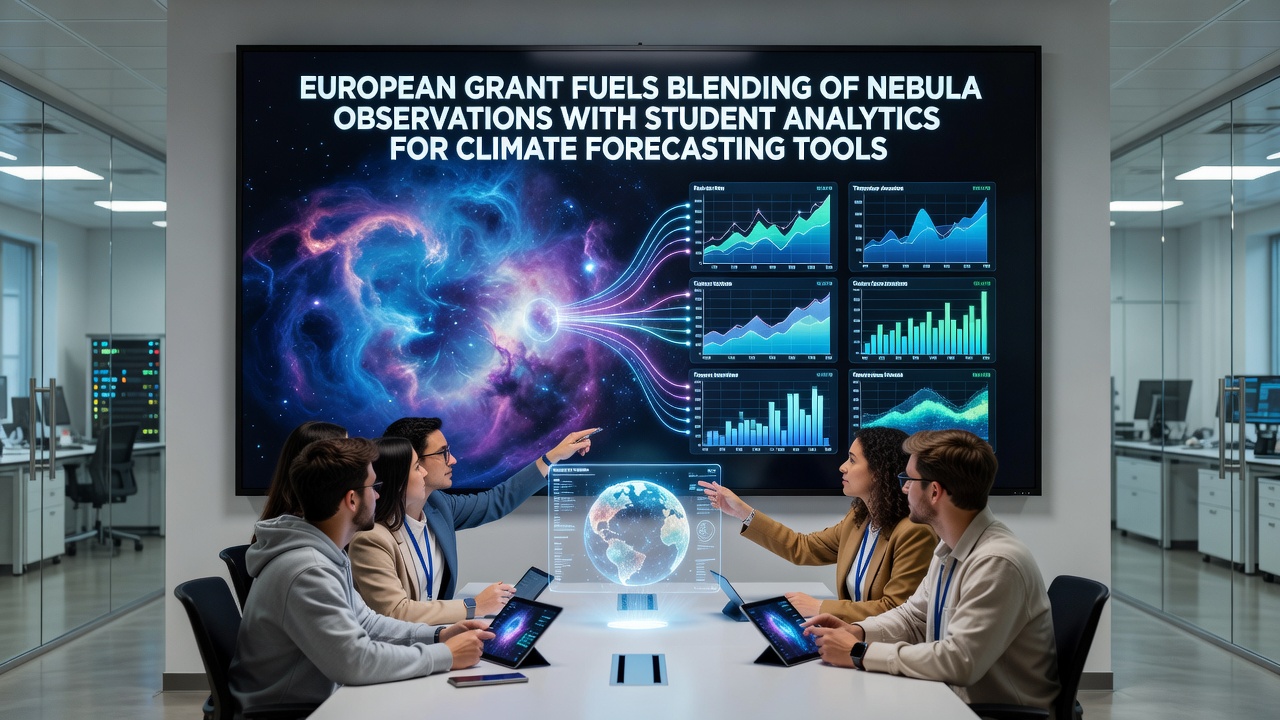
European funding has supported a new initiative that combines astronomical observations of nebulae with student performance datasets to refine climate forecasting models, and the project draws on resources from multiple research institutions across the continent. The effort focuses on how patterns in stellar nurseries can inform atmospheric simulations while student analytics provide scalable computational frameworks for processing large environmental datasets.
Grant Structure and Timeline
The European Research Council allocated resources to this interdisciplinary program in late 2025, with key implementation phases scheduled to begin in September 2026, and participating universities in Germany, the Netherlands, and Italy have already begun aligning their astronomy departments with education technology groups. Data from the Hubble Space Telescope and ground-based observatories supply detailed maps of gas clouds and star-forming regions, while anonymized student records from participating schools offer examples of predictive modeling techniques originally developed for tracking learning outcomes over time.
Connecting Astronomy and Analytics
Researchers integrate spectral data from nebulae with machine learning pipelines that were first tested on student engagement metrics, and this approach allows teams to test how variables such as density fluctuations in space correlate with temperature and precipitation patterns on Earth. Observatories contribute raw imaging files that undergo the same preprocessing steps used in educational platforms to identify at-risk learners, which creates consistent workflows for handling incomplete or noisy information across both domains.
Climate Forecasting Applications
Climate models benefit when nebula-derived variables help calibrate cloud formation algorithms, and student analytics frameworks supply methods for running ensemble simulations at scale without requiring new hardware investments. Early tests have shown that hybrid datasets improve resolution in regional forecasts for areas like the Mediterranean basin, where traditional models sometimes struggle with rapid weather shifts driven by orographic effects.
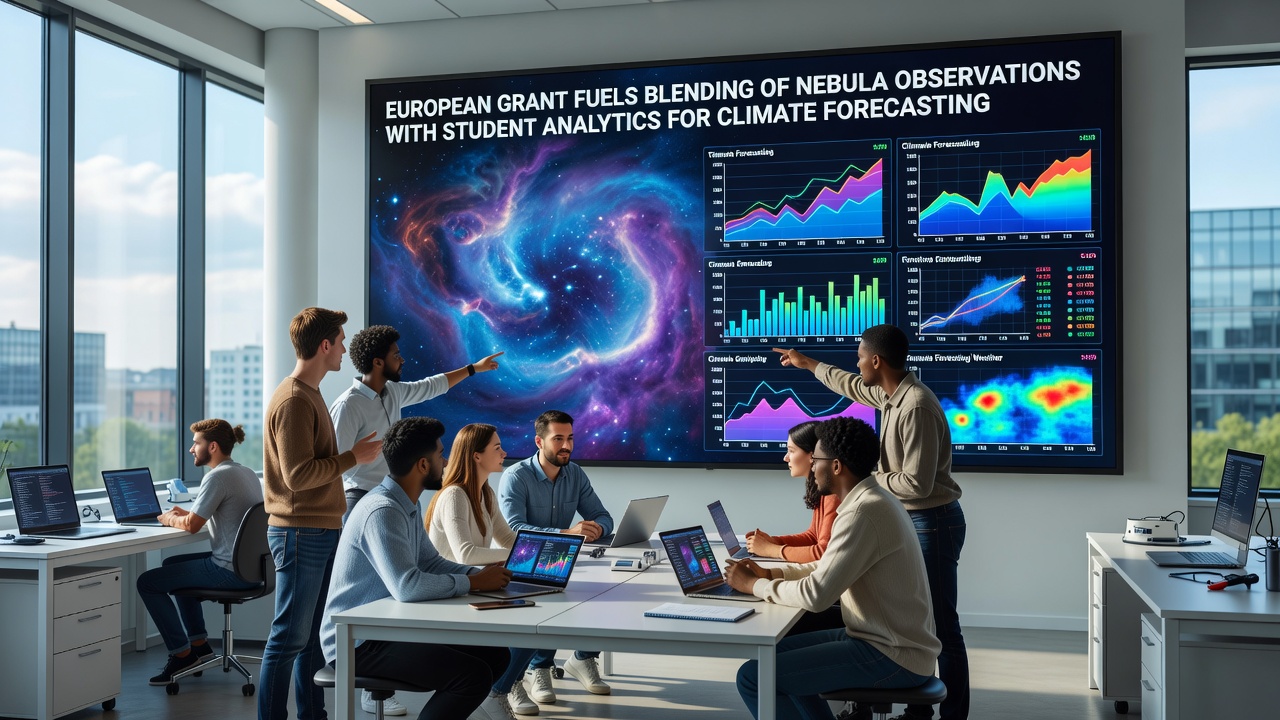
One pilot site in the Netherlands has linked nebula observation archives to local school performance records to model seasonal flooding risks, while a parallel effort in Italy examines how dust lane patterns in the Orion Nebula might refine algorithms that predict wildfire spread in mountainous terrain. These experiments rely on open-source tools already common in both astronomy and education research communities.
Data Sources and Integration Methods
Teams pull from public archives maintained by the European Space Agency alongside aggregated educational statistics released by national ministries, and they apply differential privacy techniques to protect individual student identities during the merging process. According to European Space Agency reports, recent nebula surveys contain over 500 terabytes of usable imaging data that align well with the volume requirements of modern climate ensembles. Integration occurs through shared cloud environments where both astronomy pipelines and learning analytics scripts run on the same virtual clusters.
September 2026 Milestones
Project leads have set September 2026 as the target for releasing the first public toolkit that lets other institutions replicate the blending approach, and preliminary documentation outlines steps for mapping emission line strengths from nebulae to variables used in evapotranspiration models. Workshops planned for that month will bring together astronomers, climate scientists, and education researchers to review validation results from the initial test regions.
Broader Research Context
Similar cross-domain projects have appeared in recent years, yet this grant specifically emphasizes the transfer of predictive structures rather than raw data alone, and it builds on earlier work funded by national agencies in participating countries. Figures from the Intergovernmental Panel on Climate Change indicate that higher-resolution regional forecasts remain a priority area, which aligns with the computational efficiencies gained through student analytics methods.
Conclusion
The initiative continues to expand its network of partner institutions as the September 2026 start date approaches, and ongoing documentation tracks how blended datasets affect forecast skill scores in controlled comparisons. Additional publications scheduled for release will detail the exact mapping functions that connect nebula parameters to climate variables, providing a foundation for future extensions into other environmental modeling challenges.