Alex Hayes · 6 October 2026
From Nebula Data to Classroom Curricula: The Role of EU Funding in Shaping AI-Driven Science Learning
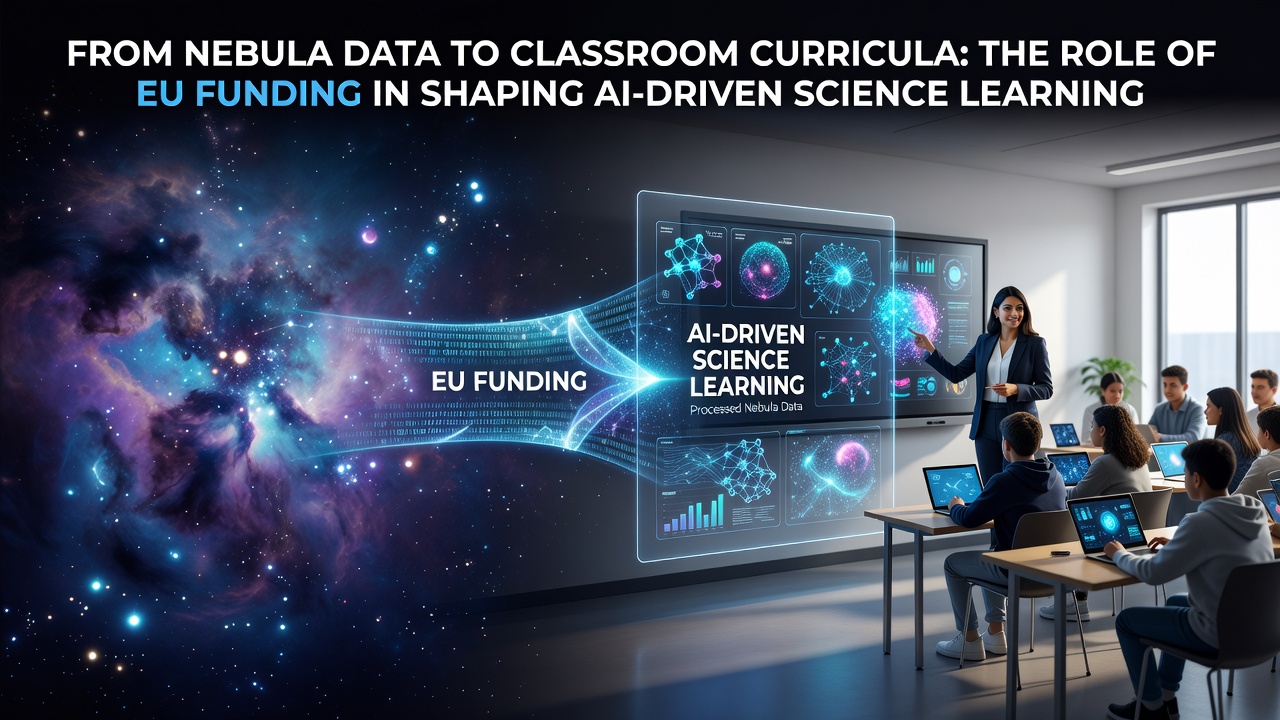
European Union funding programs have channeled resources into projects that convert raw astronomical observations into interactive AI platforms for science education, and these initiatives trace their origins to collaborative frameworks established under Horizon Europe and its predecessors. Data from nebulae, captured by telescopes such as the Hubble and James Webb Space Telescopes, supplies complex datasets that researchers process through machine learning algorithms to create adaptive learning modules. These modules allow students to explore stellar formation processes while algorithms adjust difficulty based on individual performance metrics.
Funding Mechanisms and Project Structures
Grants distributed through the European Research Council and national agencies support consortia that include universities, technology firms, and secondary schools across member states. One project launched in 2024 coordinates teams in Germany, Italy, and the Netherlands to develop neural networks capable of classifying nebula spectra, then embedding those models into browser-based classroom applications. Funding allocations for such efforts reached approximately 45 million euros in the 2023-2025 cycle, according to records maintained by the European Commission at cordis.europa.eu.
Project timelines typically span three to five years, with milestones that require integration of real telescope archives into curriculum standards. Partners must demonstrate measurable improvements in student comprehension of astrophysics concepts through pre- and post-intervention assessments. Data pipelines move information from public repositories maintained by the European Space Agency directly into AI training environments, ensuring that educational tools reflect current observational findings rather than simplified textbook examples.
Technical Integration of Nebula Datasets
Algorithms trained on emission lines from the Orion Nebula and similar regions generate visualizations that respond to student queries in real time. A platform developed under one consortium uses reinforcement learning to guide learners through spectral analysis steps, providing feedback when users misidentify molecular signatures. Such systems rely on open-source libraries and GPU clusters funded jointly by EU grants and institutional contributions.
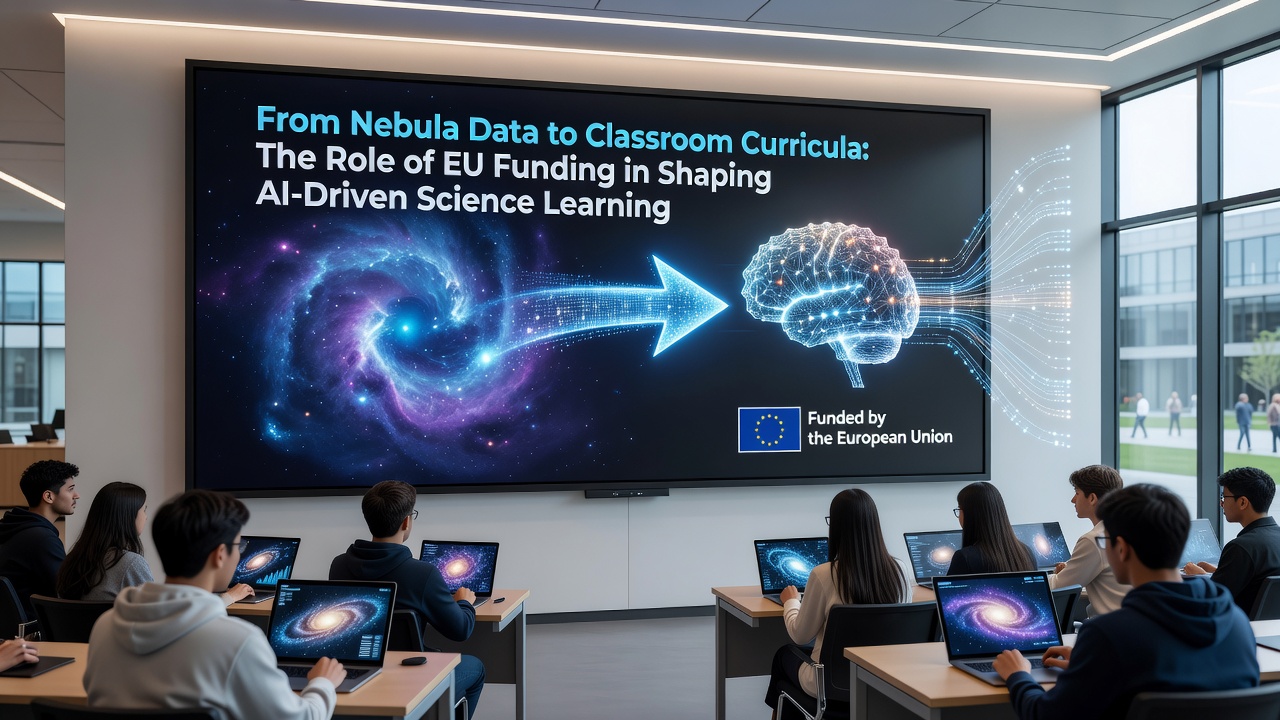
October 2026 marks the scheduled release of an updated dataset package from the EU-funded AstroEdu AI network, which will incorporate fresh observations from the European Southern Observatory. Schools participating in pilot programs receive access to these updates through secure portals that maintain compliance with data protection regulations. The release includes annotated training sets that teachers can incorporate into existing physics and computer science lessons without requiring advanced programming expertise.
Curriculum Alignment and Teacher Training
National education ministries in several EU countries have begun mapping these AI tools to learning outcomes defined in the PISA science framework and national standards. Training workshops organized by project partners teach educators how to interpret algorithmic outputs and address common misconceptions about cosmic phenomena. Sessions held in 2025 in Spain and Poland drew over 300 participants, with follow-up evaluations showing increased confidence among instructors when discussing data-driven astronomy.
Case examples illustrate the process: a secondary school in Finland integrated a nebula classification module into its environmental science unit, resulting in students generating independent research questions about interstellar dust distribution. Another implementation in Ireland combined the same AI interface with climate data to demonstrate connections between atmospheric modeling and astronomical spectroscopy techniques.
Evaluation Metrics and Broader Impacts
Independent audits commissioned by the European Commission track metrics such as student engagement duration, accuracy rates on concept inventories, and teacher-reported ease of integration. Figures released in mid-2025 indicated average gains of 18 percent on standardized astrophysics quizzes among users of the funded platforms compared with control groups. Partnerships with institutions outside Europe, including collaborations with Australian research groups, allow comparative studies that examine how similar data sets perform under different curricular contexts.
These developments coincide with parallel investments in digital infrastructure, such as expanded broadband access in rural schools and updated device procurement policies. Observers note that sustained EU support has created a feedback loop where classroom usage data informs refinements to the underlying machine learning models, improving both educational outcomes and scientific analysis capabilities.
Conclusion
EU funding continues to bridge high-level astronomical research with secondary education through structured grant programs and cross-border partnerships. The conversion of nebula observations into AI-enhanced learning environments represents one strand of this larger effort, supported by documented project outputs and scheduled releases through 2026. Continued monitoring of adoption rates and learning gains will determine the scalability of these approaches across additional scientific domains.