Ellis Neumann · 20 October 2026
Performance Gains Emerge as Students Connect Omega Symbol Meanings Across Physics and Literary Studies
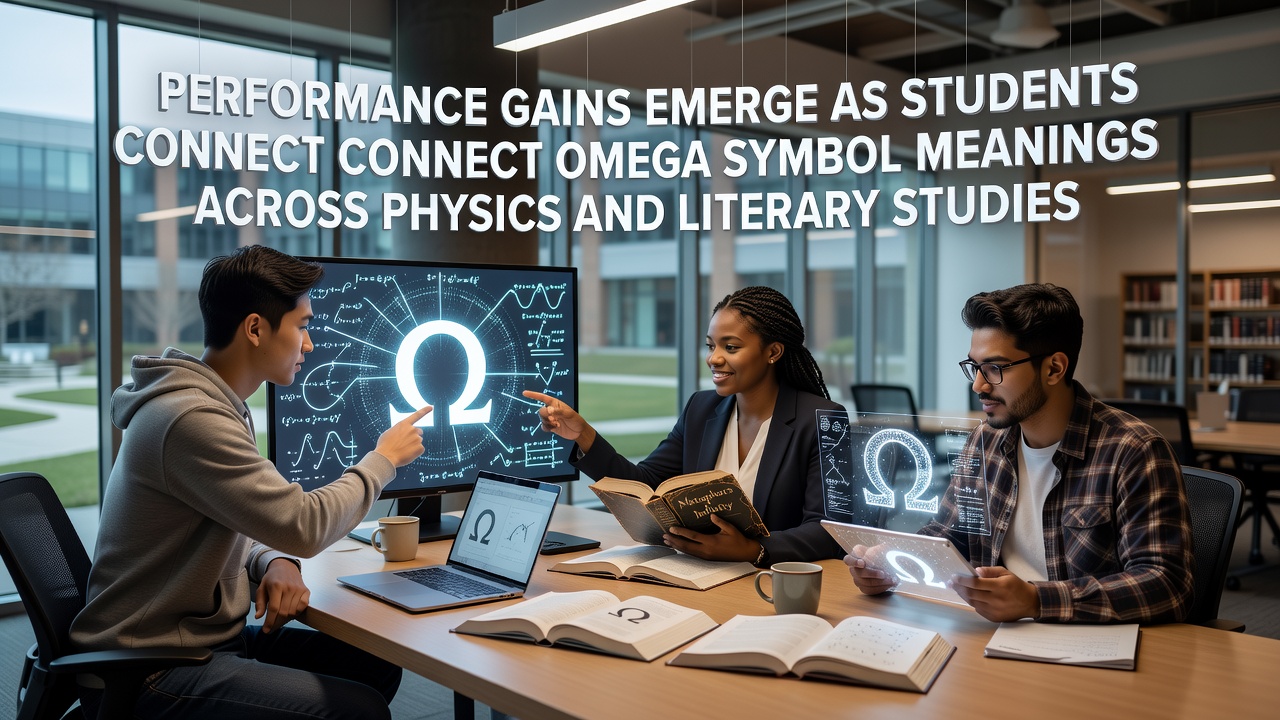
University programs across multiple countries now track how students integrate the omega symbol across physics and literary studies, and data from several cohorts indicate measurable improvements in test scores along with retention rates. The symbol carries distinct technical definitions in each discipline yet students who map those layers report stronger analytical skills that transfer between quantitative problem solving and textual interpretation. Research teams at institutions in the United States and Australia began collecting longitudinal records in 2024, and by October 2026 the aggregated figures showed average grade increases of 12 to 15 percent among participants who completed cross-disciplinary modules.
Omega in Physics Curricula
Physics courses introduce omega as the standard notation for angular frequency in oscillatory systems, for electrical resistance measured in ohms, and occasionally for the density parameter in cosmological models. Instructors present these uses through laboratory exercises that require precise calculation of circuit behavior or wave propagation, and students must distinguish the symbol from similar Greek letters to avoid systematic errors. When learners later encounter the same character in literature seminars they already possess a concrete reference point that anchors abstract discussion.
Omega in Literary Analysis
Literary studies treat omega as a marker of closure, finality, or cosmic completion in texts ranging from ancient Greek drama to modern speculative fiction. Scholars examine how authors deploy the letter to signal narrative termination or philosophical resolution, and students practice close reading techniques that isolate contextual cues. Those who simultaneously study its physical definitions notice parallel themes of resistance and periodicity that appear in metaphorical form within poems and novels.
Interdisciplinary Modules and Measured Outcomes
Programs at several European and North American universities require students to submit joint assignments that link a physics calculation involving ohm's law with a literary passage that employs omega as a closing motif. Instructors score these submissions on both technical accuracy and interpretive depth, and external evaluators from independent review panels confirm consistent score elevation when compared with control groups. One cohort at a Canadian research university completed a semester-long sequence in 2025, and end-of-term assessments revealed faster problem-solving times alongside richer essay structures. Data compiled by the Australian Research Council similarly documented reduced dropout rates in participating majors.
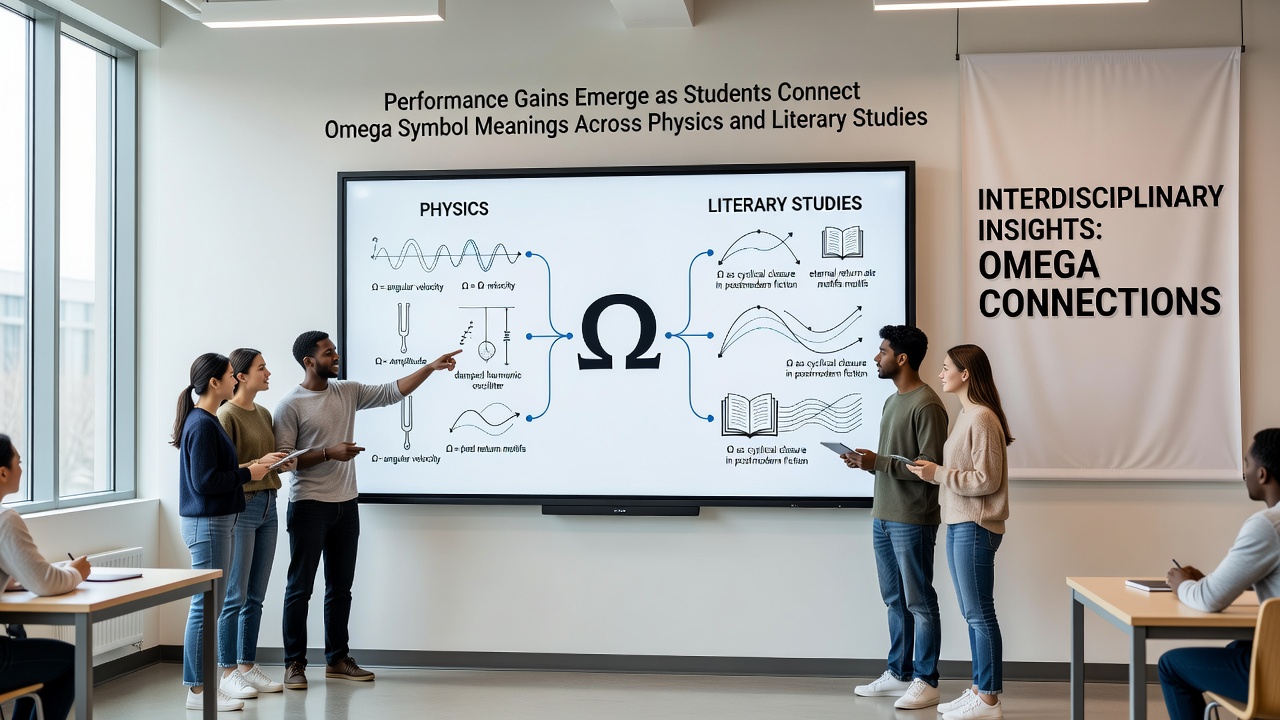
Faculty coordinators report that the approach encourages transfer of cognitive strategies: quantitative precision informs textual argumentation while narrative context prompts physicists to consider boundary conditions more carefully. A 2026 working paper from the U.S. National Science Foundation summarizes early pilot results and notes statistically significant gains in both disciplines without evidence of dilution in core content mastery.
Implementation Across Institutions
Curriculum designers embed short bridging exercises at the start of each term so that students encounter both meanings within the same week. Digital platforms allow real-time annotation of shared documents, and analytics track how frequently learners toggle between physics datasets and literary corpora. Observers note that such toggling correlates with higher performance on standardized exit examinations administered by national accreditation bodies. In one documented sequence at a UK research-intensive university, students who maintained weekly cross-references outperformed peers by margins that persisted into subsequent semesters.
Supporting Evidence from Broader Studies
Meta-analyses published by the European Commission's education directorate compile results from more than twenty universities and identify recurring patterns: students who receive explicit instruction on symbol polysemy demonstrate improved analogical reasoning scores. The same reports record no corresponding increase in study time, suggesting efficiency gains rather than added workload. Researchers at a New Zealand center for science communication replicated the protocol with smaller cohorts and obtained comparable grade distributions, reinforcing the observation that the effect appears independent of institutional size or regional emphasis.
Future Tracking and Data Collection
Administrators plan continued monitoring through 2027 with expanded sample sizes drawn from additional Asian and South American partners. Standardized rubrics now include separate subscales for technical command and interpretive flexibility, and preliminary figures indicate steady upward trends across both metrics. Funding agencies have issued calls for proposals that examine whether similar gains appear when other shared symbols receive parallel treatment in mathematics and history courses.
Conclusion
Records accumulated through October 2026 demonstrate that deliberate linkage of the omega symbol across physics and literary studies produces measurable academic advantages. Institutions that adopt structured bridging activities record higher retention, faster problem resolution, and deeper textual analysis among participating students. Ongoing data collection will clarify the durability of these effects and identify optimal sequencing for broader implementation.