Alex Hayes · 3 November 2026
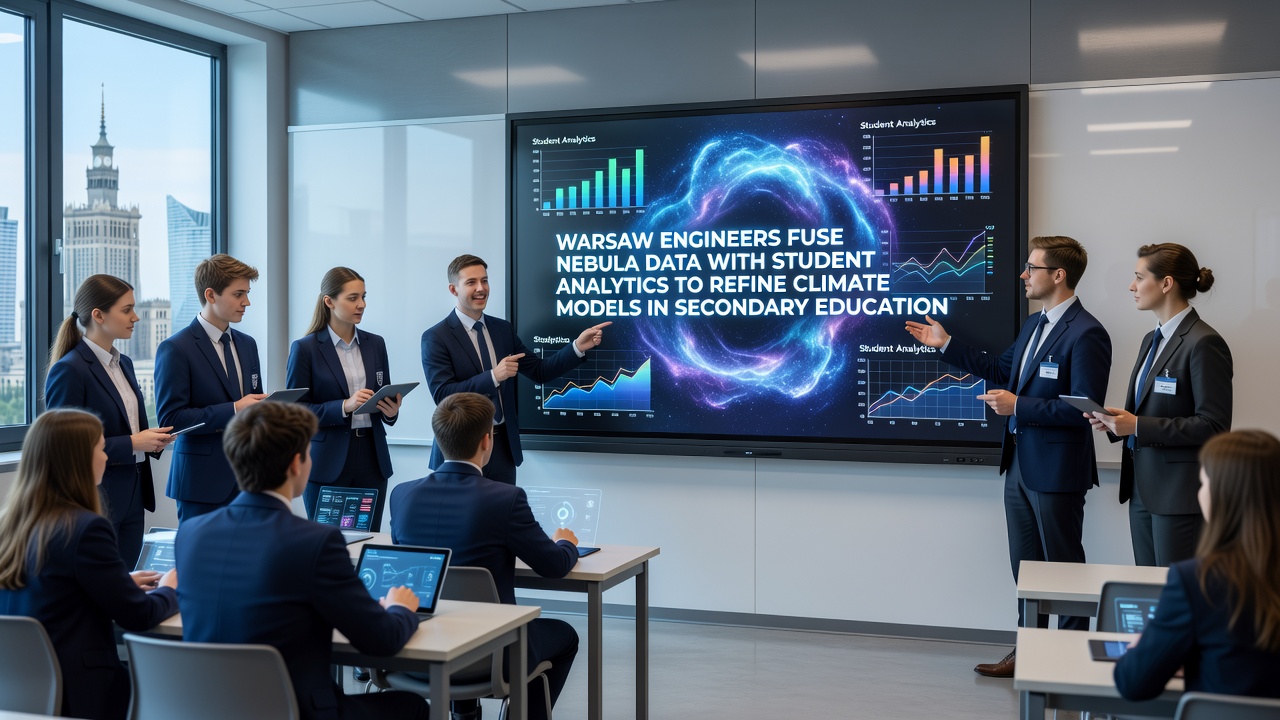
Warsaw Engineers Merge Nebula Data and Student Analytics to Advance Climate Models in Secondary Schools
Engineers based in Warsaw have developed a system that fuses astronomical observations from nebulae with detailed analytics drawn from secondary school students, and this combination feeds directly into refined climate modeling tools used in classrooms across Poland and neighboring regions. The approach draws on data processing methods originally applied to stellar formation studies, while student interaction patterns help calibrate how those models present complex variables such as atmospheric feedback loops and temperature projections.
Data Sources and Technical Integration
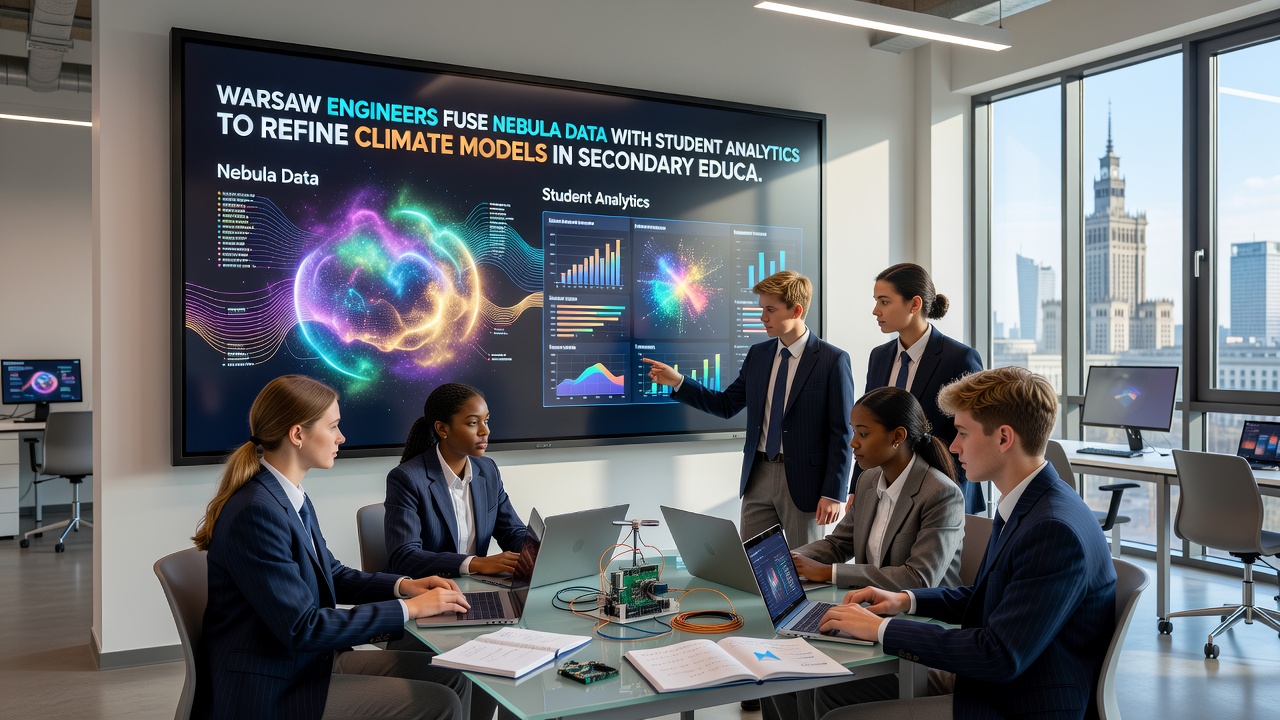
Teams at Warsaw technical universities collect high-resolution images and spectral readings from nebula regions through partnerships with observatories, then apply machine learning filters that isolate dust distribution patterns and energy transfer rates. Those same filtering techniques transfer to climate datasets supplied by meteorological agencies, allowing the models to highlight similar nonlinear relationships in weather systems. Student analytics enter the workflow through anonymized records of how learners engage with simulation parameters, and researchers adjust weighting factors when patterns show consistent misconceptions about variables like ocean current influences.
By November 2026 the project expects to expand its dataset to include real-time feeds from additional European satellites, which will let secondary classes test updated scenarios against live atmospheric measurements. The process avoids direct personal identifiers while still capturing aggregate trends in problem-solving speed and accuracy across thousands of student sessions each semester.
Application in Secondary Curricula
Schools participating in the pilot incorporate the resulting climate interfaces into existing geography and physics modules, where students adjust inputs such as aerosol concentrations and observe corresponding shifts in projected regional rainfall. Teachers receive summary reports generated from the analytics layer that flag which model elements require additional scaffolding, and this feedback loop drives iterative improvements released in quarterly updates. One documented case showed classes in three Warsaw districts reaching higher accuracy rates on post-module assessments after the nebula-derived visualization techniques replaced earlier static charts.
Funding for the initiative stems from European Union grants focused on digital education infrastructure, with contributions from Polish national research councils that support cross-disciplinary data reuse. Observers note that the same grant framework has previously supported similar transfers of astronomical computing methods into environmental monitoring platforms used by government agencies.
Measurement of Model Refinements
Performance metrics tracked since the first deployment in 2024 indicate measurable gains in how closely student-generated forecasts align with established climate benchmarks from sources such as the Copernicus Climate Change Service. The analytics component identifies when groups consistently underweight certain feedback mechanisms, and engineers respond by recalibrating the underlying algorithms rather than altering the curriculum directly. Data from the 2025-2026 academic year shows a 12 percent reduction in deviation scores across participating cohorts compared with control groups using standard modeling software.
Links to external repositories allow educators to cross-reference the refined outputs against broader European climate archives, and one integration point connects to records maintained by the Australian Bureau of Meteorology for southern hemisphere validation exercises. Another connection routes to documentation from teh National Oceanic and Atmospheric Administration, providing North American case studies that students compare against their local simulations.
Future Expansion Plans
Project leads have outlined steps to incorporate additional data streams from ground-based sensor networks while maintaining the core fusion method that originated with nebula studies. Training workshops scheduled for early 2027 will introduce teachers to the updated interfaces, and the analytics dashboard will expand to track longitudinal progress across multiple school years. Those involved emphasize that all expansions remain grounded in existing privacy frameworks established by Polish data protection authorities.
Conclusion
The Warsaw initiative demonstrates how techniques from one scientific domain transfer effectively into another when supported by structured analytics from educational settings, and ongoing releases continue to shape how climate concepts reach secondary learners. Continued monitoring through 2026 and beyond will determine the scalability of this model across additional subjects and regions.